





.png)

.png)





History isn’t just found in museums.
Sometimes, it’s in the names of streets we drive every day, the churches that have stood for generations, old photographs tucked away in scrapbooks, and the memories of people who were there.
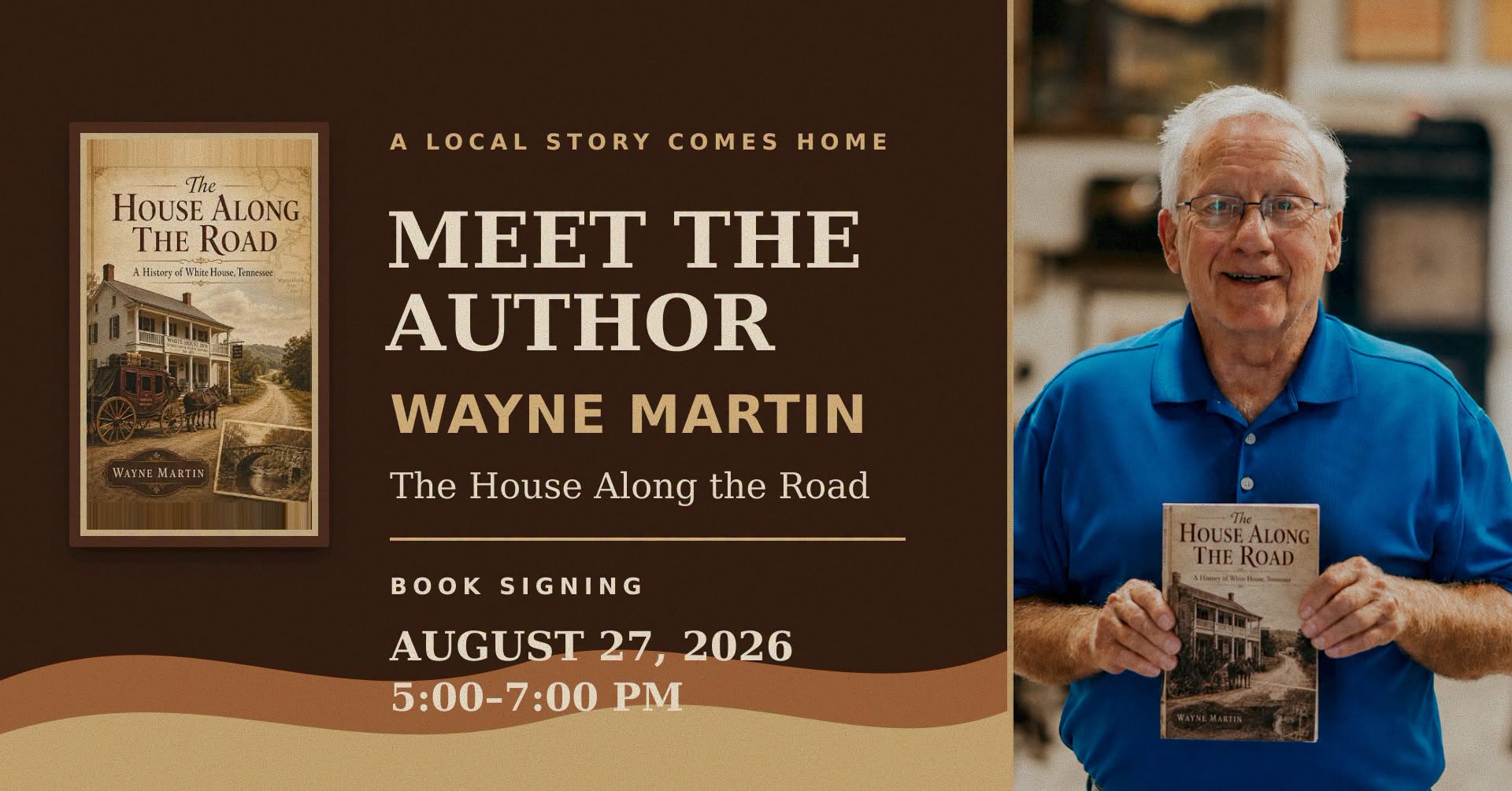
For Wayne Martin, a lifelong connection to White House and an interest in genealogy eventually became The House Along the Road: A History of White House, Tennessee—a book tracing the community’s story from its earliest days through the present.
Martin’s family has four generations deep roots in the White House and Sumner County area. During COVID, he began doing genealogy research, which naturally led him into local history.
After retiring in 2021, Martin had more time to pursue that interest. Conversations with White House Inn Museum volunteers Terry Palmer and Josette Williams, punctuated with prodding from Museum Director Susan Holcraft, planted a seed.
“I think Terry figured out I was retired and was trying to give me something to do,” Martin said with a laugh.
What began as a suggestion became a personal challenge—and eventually a book.


Martin wanted the story to be more than a list of names and dates.
“I didn’t want it to be a genealogy,” he said. “I didn’t want to just list facts or names or whatever.”
Instead, he wanted to capture the culture and experiences that shaped White House.
For one hundred and twenty-five years, public schools have been at the core of this community’s identity. One important story Martin wanted to include was the integration of the local school system. Martin was part of the community during that period and was a member of White House’s first integrated sports team.
“Leonard and I still talk,” he said, recalling his teammate from those early years, Leonard Payne.
Martin cites a strong community spirit for allowing White House to navigate that period of history. He credits local volunteers, school administrators, and community members for embracing the vision of unity.
“My premise in the book is, we owe a lot to that group of 10 or 15 African American students who voluntarily attended White House schools for those first two or three years,” he said. “They helped us figure out how to do it with few incidents.”
His research also revealed that White House’s history reaches much farther back than many people realize—including the years before the community’s namesake white house existed.
Martin explores Fort Hamilton, early agriculture and farm families, churches and the road that has long served as the center of the community.
“The central part of the town’s always been that road,” he said, pointing to 31-W.
For Martin, understanding that history isn’t simply about looking backward.
“If you want to be part of the community, you want to influence its future, then you’ve got to know its past,” he said.
And learning that past has strengthened his optimism about what comes next.
“You’re aware of things that were overcome,” Martin said. “Overall, I mean, I think the trend is up. It’s an improvement.”
His conclusion is simple:
“I’m an optimist.”
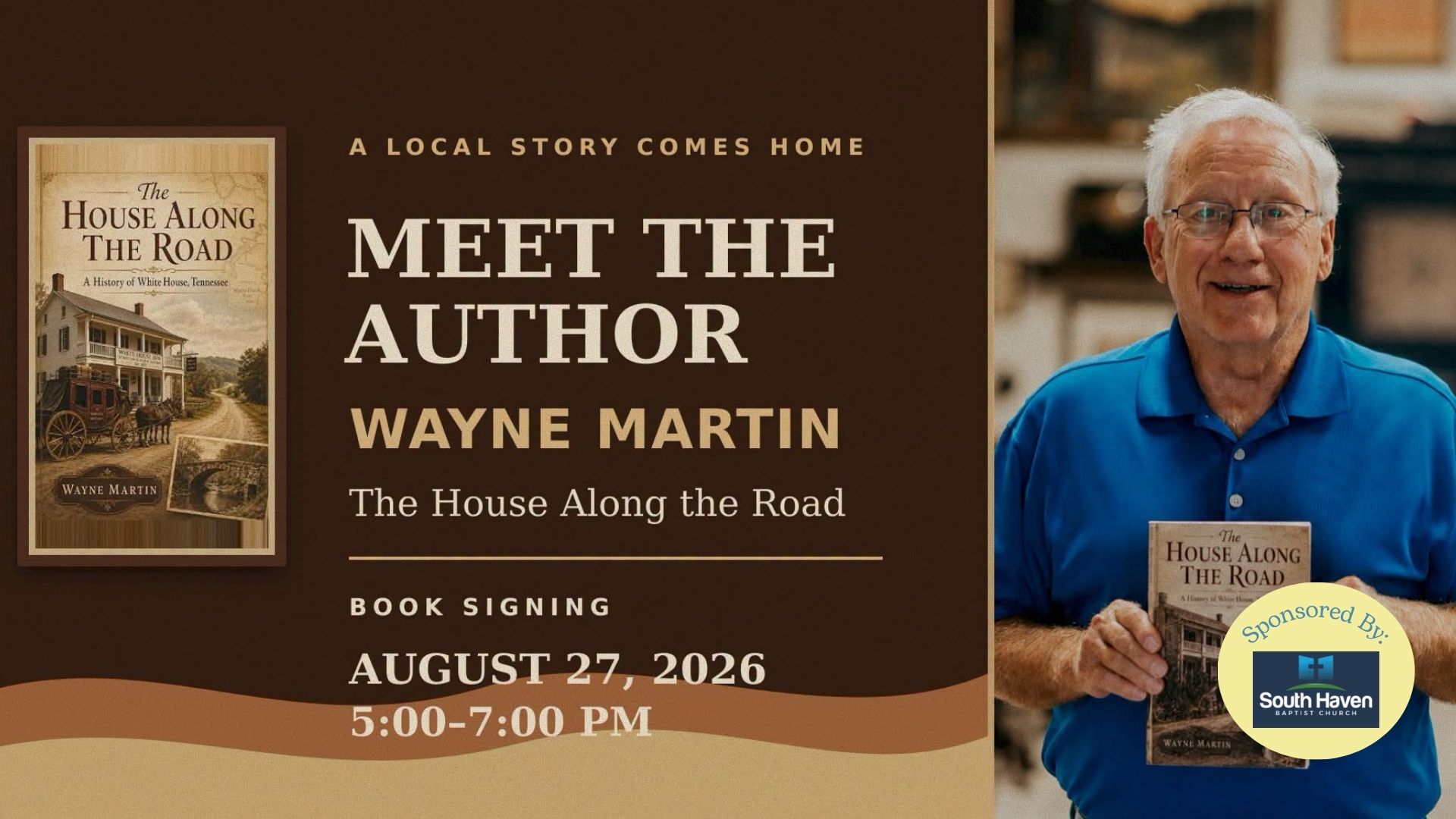
Wayne Martin will be at the White House Inn Museum on Thursday, August 27, from 5–7 p.m. for a book signing. Community members can meet Martin and get a copy of The House Along the Road: A History of White House, Tennessee—a new resource for anyone who wants to better understand the community they call home.

We're always looking for positive news to share with our community. Let us know all about it!
Share Your News
.jpg)
Designed and powered by nixonPRO media.
Proud members of the White House and Robertson County Chambers of Commerce.

.png)




.jpg)
.jpg)