








.png)

.png)



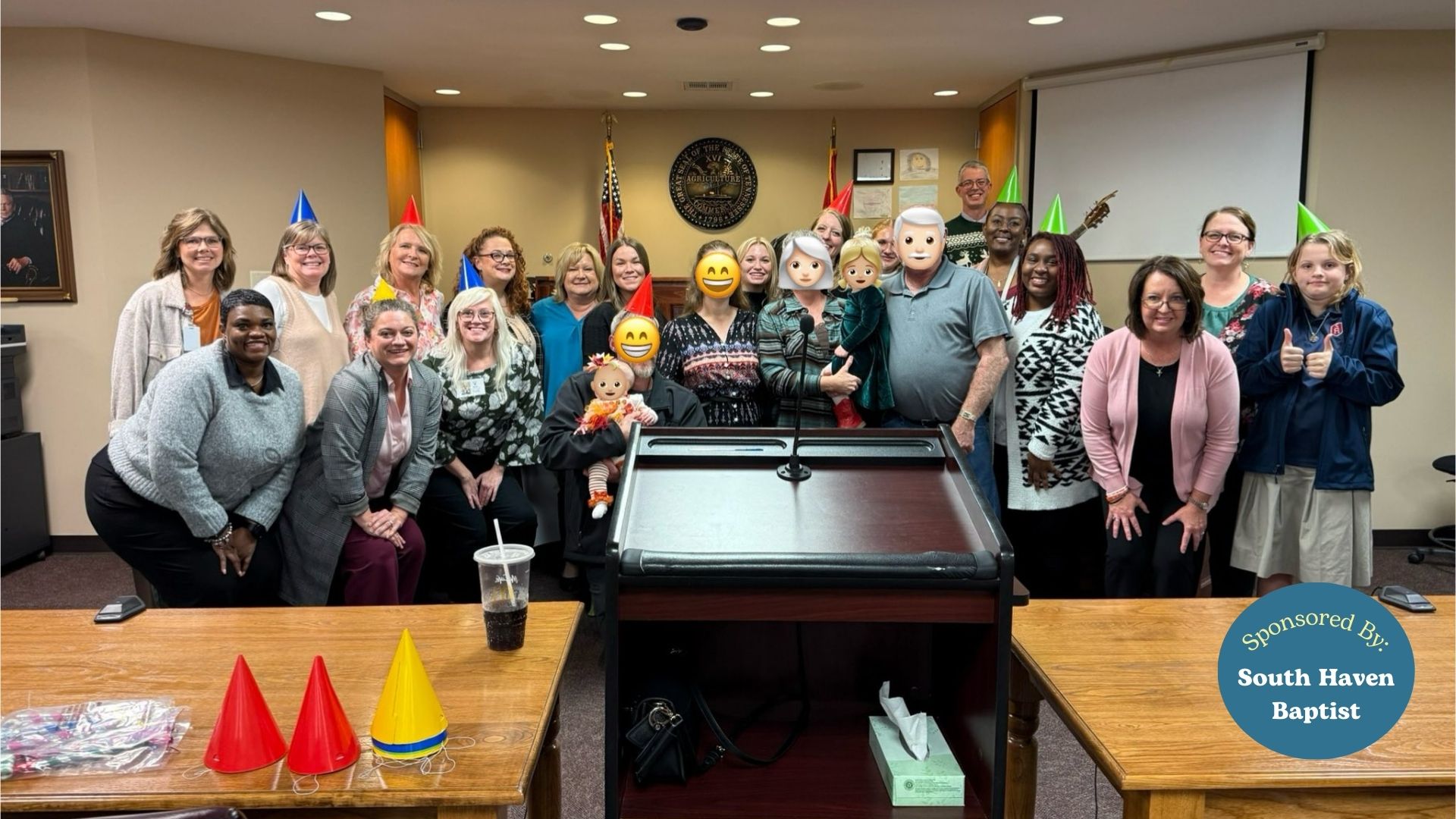
On November 20, in a juvenile courtroom that normally bears witness to tears and tension, there were balloons. Paper party hats. Those little party blowers.
It was Safe Baby Court of Robertson County’s very first graduation, honoring a young family who had completed a year-long journey in the new Safe Baby Court program, and no one in the room took that lightly.
“This wasn’t just a case closing,” says Safe Baby Court Coordinator Tiffany Thompson. “It was a celebration of a family that worked incredibly hard to change their story, for themselves, for their children, and for generations to come.”

And while the family, who moved to Tennessee just two weeks before child protective services became involved in their lives, had arrived in a town where they knew almost no one, by graduation day, they had something much more than a court order behind them … they had a community.
Under the supervision of Juvenile Court, Safe Baby Court works with families who are involved with the Department of Children’s Services (DCS). To qualify, a family must have at least one child aged three or younger.
“We’re part of the judicial court system,” Tiffany explains. “Think of us like an alternative court program, similar in spirit to Recovery Court or Mental Health Court, but focused on very young children and their families. If you can support a family at that early intervention stage when their children are very young, you have much better hopes for the longevity and health of that family.”
Unlike some traditional child welfare cases, the goal of Safe Baby Court is not to immediately remove children from their homes. In fact, the program prefers that the children remain safely with their parents whenever possible.
“We come in and wrap supports around the family,” says Tiffany. “We build an intensive team that includes attorneys, service providers, mental health professionals, and we really dig into what’s causing the issues. Is it addiction? Is it mental health? Parenting skills? We’re not just saying, ‘Fix it.’ We’re saying, ‘Let’s figure out how to fix it together.’”
Tiffany has worked in child welfare in various roles for over 20 years, and one theme she sees repeatedly is the role of substance misuse in families’ struggles.


“Substance abuse or misuse isn’t always present, but it’s often a common denominator,” she says. “It doesn’t always look the same, but it may be there behind neglect, behind instability, behind a lot of the trauma.”
For families, it can feel terrifying and confusing when DCS gets involved.
“It’s like being dropped into a foreign country where you don’t speak the language,” Tiffany explains. “Part of my job is to help them navigate the system. I get to sit with them and say, ‘Here’s what’s being asked of you, here’s why, and here’s how we’re going to help you get there.’”
Participation in Safe Baby Court is voluntary, but it’s not easy. Families attend monthly court hearings and monthly Child and Family Team Meetings (CFTMs). Parents complete in-depth mental health, substance use, and parenting assessments. Children receive their own developmental assessments and services.
“It’s more intense,” Tiffany notes, “but it’s also a shortcut uphill. It’s designed to move faster, so kids can get to lasting permanency sooner. That stability is so important for child development.”
Alongside Safe Baby Court stands CASA of Robertson County — Court Appointed Special Advocates — whose volunteers and staff get to know the children and support the family throughout the process. CASA advocates visit with program participants, attend meetings, go to court, and help meet practical needs.
“With the particular family that graduated, we watched the mom grow tremendously,” says CASA Executive Director Leah Blocker. “At first, because of certain circumstances, she wasn’t able to have contact with her little girl. Over time, she worked incredibly hard to rebuild that bond, step by step.
“The dad works out of town five days a week, so the mom was often doing everything on her own in a town where they had no family. The Safe Baby team really became her support system.”
One of the most striking differences between a typical courtroom experience and Safe Baby Court is the atmosphere.
“Safe Baby is supposed to feel different,” Leah emphasizes. “Even in regular hearings, there’s more open dialogue, more focus on support than punishment. But graduation day was something else.”
On this special occasion, the juvenile magistrate didn’t just announce that the case was closed, according to Leah:

“After she finished the official court business, she took off her robe, came down off the bench, and joined the celebration. There was food, live music, party hats, and just so many hugs. It was emotional in the best possible way.”
Adds Tiffany, “We wanted this to reflect how much hard work goes into changing generational patterns. In child welfare, we often just say, ‘Good job, case closed,’ and move on. But these families are doing incredibly hard, brave work. That deserves more than a quiet ‘thank you’ on the way out the door.”
Even after graduation, the relationships often remain.
“As Mom walked out of the courtroom that day, I hugged her and said, ‘I’m always here,’” Tiffany recalls. “I may not have the same resources to offer anymore, but I will still be a resource. Sometimes what we need most is just someone to remind us, ‘You’ve got this,’ when we don’t feel like we do.”
Over the past year, Safe Baby Court has served seven families. As it continues to expand, the hope is that stepping in early and intensively will lead to preventing years of future trauma, removals, and court involvement.
“This is about more than just one case,” Tiffany stresses. “When a family does this kind of work, their children and their children’s children benefit. They really are changing the script.”

We're always looking for positive news to share with our community. Let us know all about it!
Share Your News
Designed and powered by nixonPRO media.
Proud members of the White House and Robertson County Chambers of Commerce.

.png)




.jpg)
.jpg)
.jpg)