

.png)

.png)










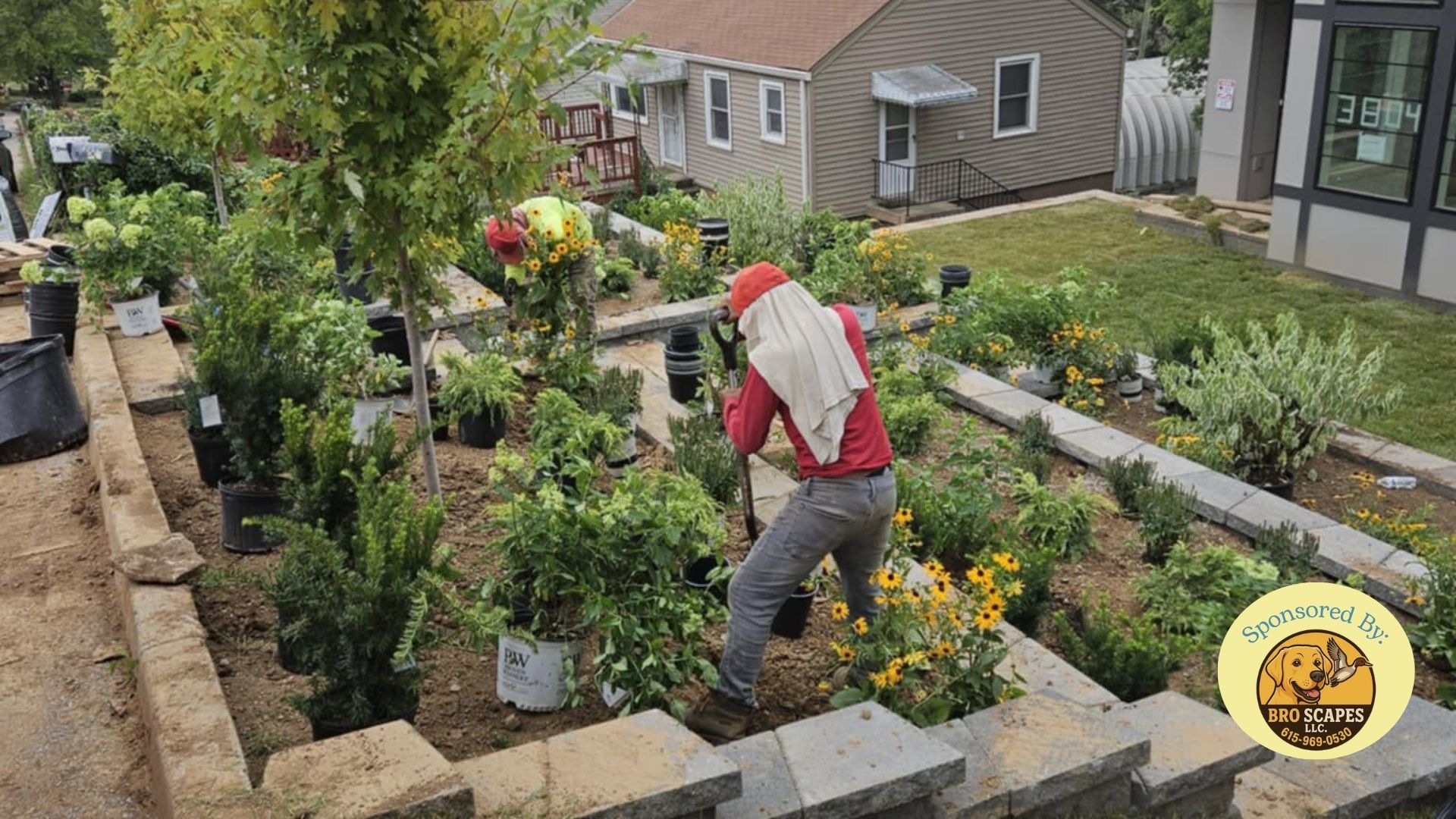
When most people think about landscaping, they picture colorful flowers, healthy lawns, and maybe a few perfectly placed shrubs.
What they don't usually think about is where all that rainwater goes.
But after one heavy Tennessee downpour, those puddles in your yard, muddy patches, or rushing water washing away mulch suddenly become hard to ignore.
That's where a rain garden comes in.
No, it's not a garden that enjoys getting rained on.
It's a landscape feature designed to work with nature instead of against it.
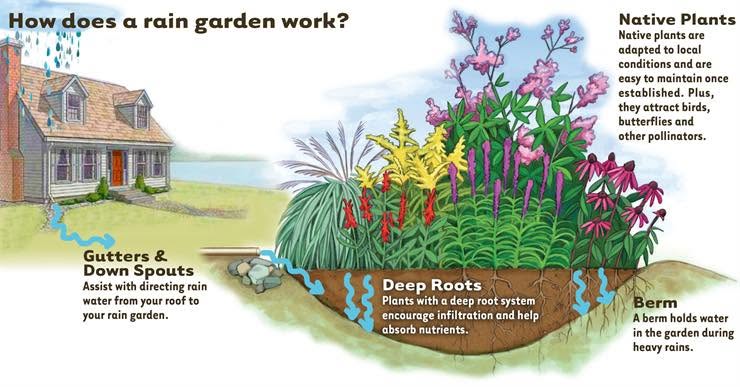
A rain garden is a shallow, landscaped area filled with native plants, grasses, flowers, and shrubs that temporarily collects rainwater from roofs, driveways, sidewalks, or other hard surfaces.
Instead of allowing water to rush across your yard carrying soil, fertilizer, and debris into nearby streams, a rain garden gives that water a chance to soak naturally into the ground.
Think of it as your yard's own built-in filtration system.
Or, as our office mascot Rip likes to think of it, "the world's fanciest drinking bowl."
(For the record, Rip has been informed that rain gardens are not, in fact, giant dog bowls.)
Rain gardens aren't just environmentally friendly—they're practical.
They can help:
They're one of those rare landscaping projects that work hard while looking effortless.
One of the biggest misconceptions is that rain gardens have to resemble an overgrown meadow.
Not at all. (Take our cover photo, for example. That project fits in with the home design--modern, clean edges.)
A professionally designed rain garden can be as polished and intentional as any other landscape bed.
With the right mix of native plants, decorative stone, mulch, and thoughtful design, it becomes a beautiful focal point—not something that looks forgotten.
The goal is to make it appear like it naturally belongs there.


Native plants are often the stars of a successful rain garden because they're already adapted to our Middle Tennessee climate.
That means they're better equipped to handle both wet conditions after a storm and drier periods between rainfall.
Many also provide food and habitat for birds, butterflies, and beneficial insects.
It's one of those rare situations where choosing the easier option also happens to be the better one.
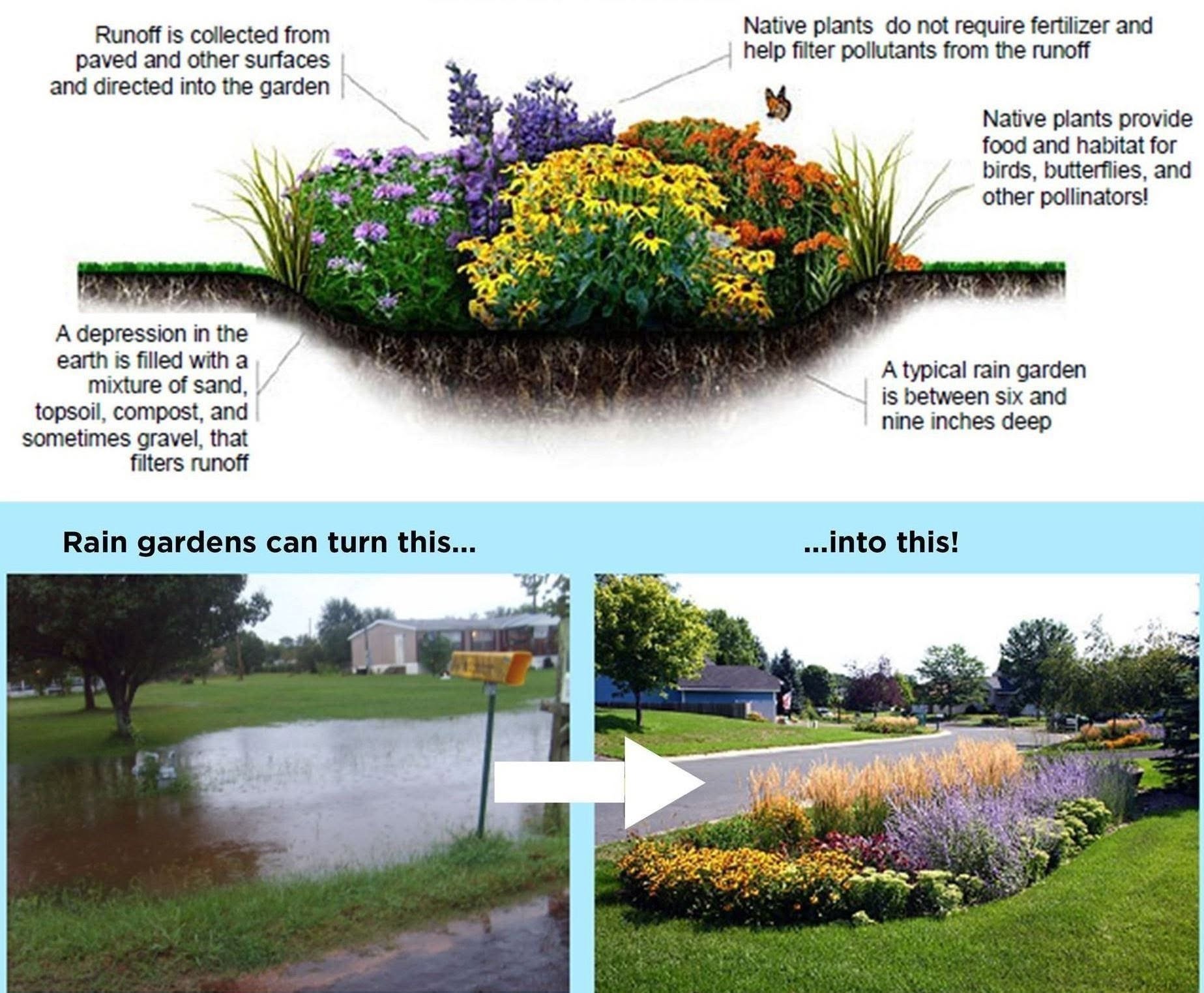
A rain garden isn't something you simply dig wherever you have an empty space.
The location matters.
So does the slope of your property, soil type, drainage patterns, existing landscaping, and how water naturally moves across your yard.
A properly planned rain garden should collect water where it's needed without creating new drainage problems elsewhere.
That's why every design starts with understanding the property first.
If you've ever watched Rip after a storm, you'll notice something interesting.
He doesn't run through the giant puddles. (Unless he sees a duck taking a dip…then he’s full-on diving in.)
He finds the dry paths.
Smart dog.
Your landscape should do the same.
Instead of fighting every rainstorm, a well-designed yard works with Mother Nature—guiding water where it belongs while creating healthier plants, stronger soil, and a landscape that's built to last.
And if Rip approves?
Well...that's just an added bonus.
Whether you're dealing with soggy spots, erosion, or simply looking for a sustainable way to upgrade your landscape, rain gardens are worth considering. They prove that some of the best landscape designs don't just look beautiful—they solve problems you didn't even realize had a solution.
Follow Rip and me on our Facebook page or check out our website for more information.

We're always looking for positive news to share with our community. Let us know all about it!
Share Your News
.jpg)
Designed and powered by nixonPRO media.
Proud members of the White House and Robertson County Chambers of Commerce.

.png)


.jpg)
.jpg)